
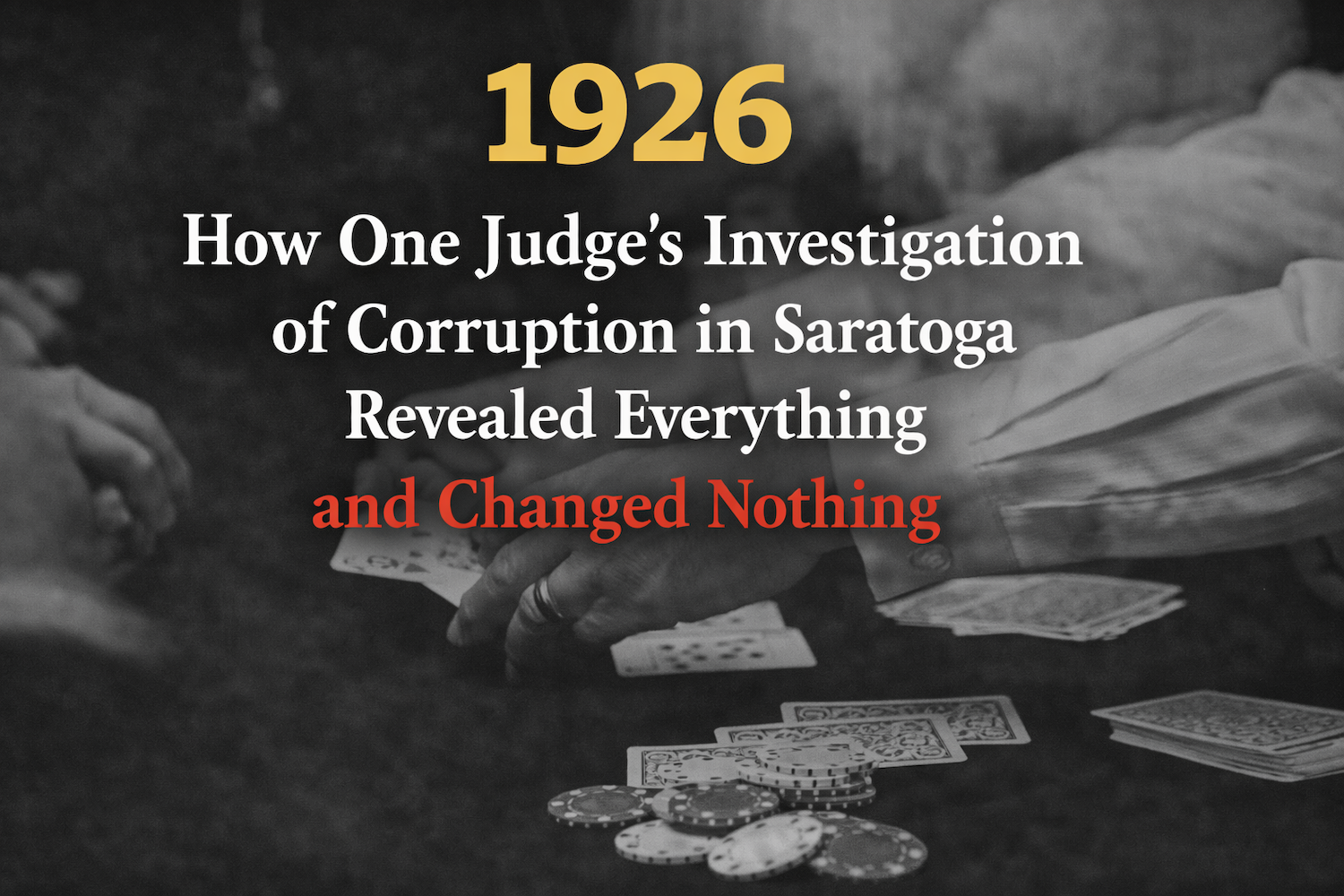
In the summer of 1926, Saratoga Springs was forced into the spotlight as a state-led investigation exposed a city where gambling, politics, and law enforcement moved in quiet alignment. What began as one citizen’s challenge to the system became a high-stakes public reckoning that revealed a carefully maintained system built on looking the other way.
For years, Saratoga Springs had operated under the Saratoga Way, an unspoken arrangement in which gambling flourished openly while law enforcement looked the other way. But in the late spring of 1926, this generally accepted part of the seasonal economy was publicly challenged by a bold reformer named Peter Finley, President of the Saratoga Springs Taxpayers Association.
By mid-summer, Governor Al Smith was feeling the pressure. Recognizing both the risks and necessity of intervention, he invoked the Moreland Act, which grants the Governor the authority to examine the affairs of any department, board, bureau or commission in the state. What had long been tolerated as custom was now being recast in Albany as a test of whether the rule of law still held in Saratoga Springs.
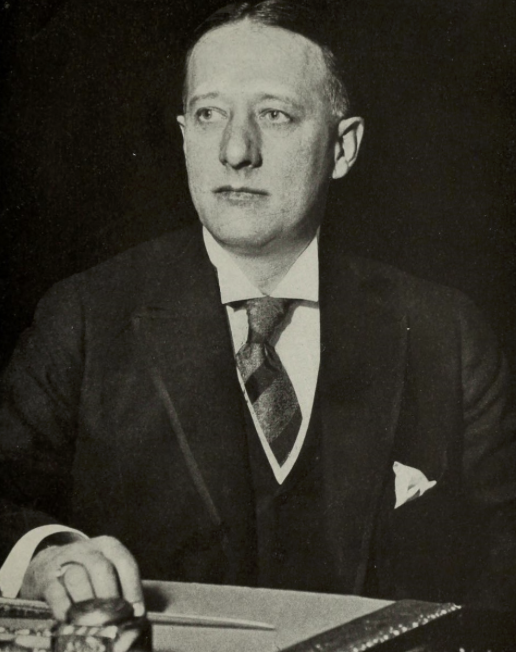
New York Governor Al Smith
As Heffernan angrily shouted at one baldly uncooperative witness, Mellefont’s Cafe operated by day just 100 yards from the courthouse at 449 Broadway (the address where Soave Faire now operates today), but became at night a “Red Front” gambling house. The brazenness of it—vice transforming in plain sight within earshot of the courthouse—captured the very essence of the Saratoga Way.
“I am fully satisfied that during the time set forth in the petition gambling, consisting of pool selling, book-making, faro, cards, roulette and other games of chance, was conducted openly and notoriously in the City of Saratoga Springs,” Heffernan concluded in his report to Smith.
Smith named Supreme Court Justice Christopher Heffernan to lead the investigation. “A more aggressive and fearless Judge could not have been selected,” The New York Times reported.
Heffernan exposed a network of illegality—payoffs and protection that allowed vice to thrive under a veneer of order. He laid bare the rot in the city’s police department.
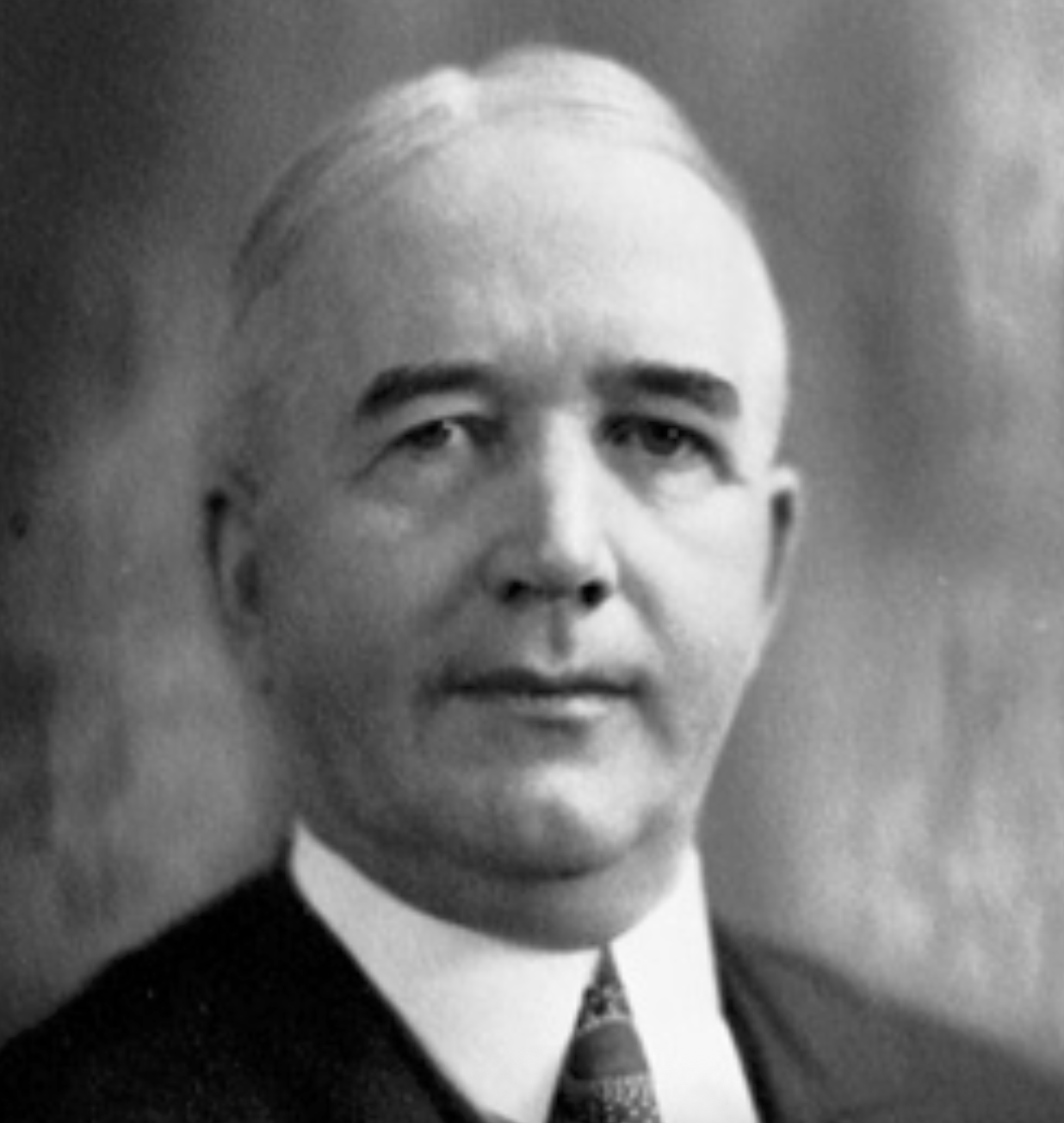
Justice Christopher Heffernan
Smith promptly removed for dereliction of duty District Attorney Charles Andrus and Sheriff Arthur G. Wilmont. Public Safety Commissioner Arthur “Doc” Leonard resigned before Smith could fire him.
Prosecutors tried to indict these public officials for their misdeeds, but the grand juries they convened declined to cooperate. Mobsters, politicians, and police continued to collude in the dark corners of a city that, for one brief moment during the summer of 1926, had been forced to explain itself.
In 1931, Leonard would run again for Public Safety Commissioner — and win.
Before the hearings, during the testimony, and long after the headlines faded, James Leary remained largely untouched. A protégé of Senator Edgar T. Brackett, who had served as Minority Leader of the New York State Senate, Leary was the quiet architect of the Saratoga Way.
Operating not on the surface but within the machinery itself, he was able to avoid both the witness stand and the spotlight. While others were named, removed, or forced to answer, Leary pulled the strings behind the scenes for more than 30 years, showing that that the true strength of the Saratoga Way lay not in those exposed, but in those who were never called at all.
Meet James Leary with Help from AI
AI Podcasters in NotebookLM
Tell Leary’s Story
Eleven Labs Tells Leary’s Story in
His Own AI-scripted Words
Thanks to Greg Veitch
for joining us in our
Story Accelerator
MONDAY, MARCH 23, 7 P.M.

Greg Veitch
Veitch retired as Chief of Police in Saratoga Springs after 25 years in law enforcement. A fifth-generation Saratogian, he’s the author of two books on the history of gambling and organized crime in Saratoga.
His first book, All the Law in the World Won't Stop Them, tells the true story of the struggle between the forces of vice and the forces of law and order in Saratoga before the prohibition era.
His second book, A Gangster's Paradise, recounts true tales of crime, violence, gambling and corruption in the Spa City from Prohibition to the Kefauver hearings in the 1950's.