

For a city, climate change is not an abstract global phenomenon debated on cable news. It is a series of concrete, predictable, and increasingly disruptive challenges to its economy, its culture, and the quality of life it offers its residents. Understanding localized climate projections is therefore a strategic necessity. The City of Saratoga Springs’ Municipal Climate Action Plan grounds itself in this reality, drawing on regional climate science to paint a stark but necessary picture of the future its citizens must prepare for.
The most immediate changes will be felt in the rhythm of the seasons. Saratoga Springs is projected to experience both hotter summers and warmer, shorter winters. Historically, the city averaged just one day per year over 95°F. By the 2050s, that number is expected to climb to between eight and nineteen days. Conversely, the number of days with temperatures dropping below 0°F will plummet from an average of fourteen to between just two and five.
This seasonal realignment carries with it a cascade of consequences. The surge in extreme summer heat will drive up energy demand for air conditioning, straining the electrical grid and increasing costs. At the same time, the loss of deep winter cold threatens a cornerstone of the regional economy: winter sports. With less reliable snow and more precipitation falling as rain or ice, the viability of cross-country skiing, snowmobiling, and ice fishing is in jeopardy.
The region's relationship with water is also set to become more volatile. Projections show that total annual precipitation will increase, but this change masks a more dangerous reality. The additional rainfall is expected to arrive in the form of more intense, concentrated storms, leading to a greater risk of flash flooding and overwhelmed stormwater systems. This deluge, however, will be punctuated by periods of drought.
As the city’s climate plan notes, recent events—like the "Extreme Drought" of 2016-2017 and the moderate-to-severe droughts of 2020-2022—demonstrate the region's vulnerability. This oscillation between extremes, what some scientists have termed "climate chaos," forces the city to prepare for contradictory threats simultaneously.
These climatic shifts are not just logistical challenges; they strike at the heart of Saratoga's identity. The city’s historic horse racing season, held during the hottest part of the year, faces a growing threat of race cancellations due to extreme heat. Beyond the track, the city’s beloved urban forest is under stress. Hotter temperatures and drier soil weaken trees, while warmer winters allow invasive pests to thrive. The emerald ash borer, in particular, now jeopardizes entire species; of the city’s 12,000 inventoried street and park trees, some 550 are ash trees now under direct threat. Faced with this unavoidable future, the city must pursue a dual-pronged strategy: it must do its part to slow the warming by cutting its own emissions, and it must prepare its people and infrastructure for the changes that are already locked in.
Mitigation
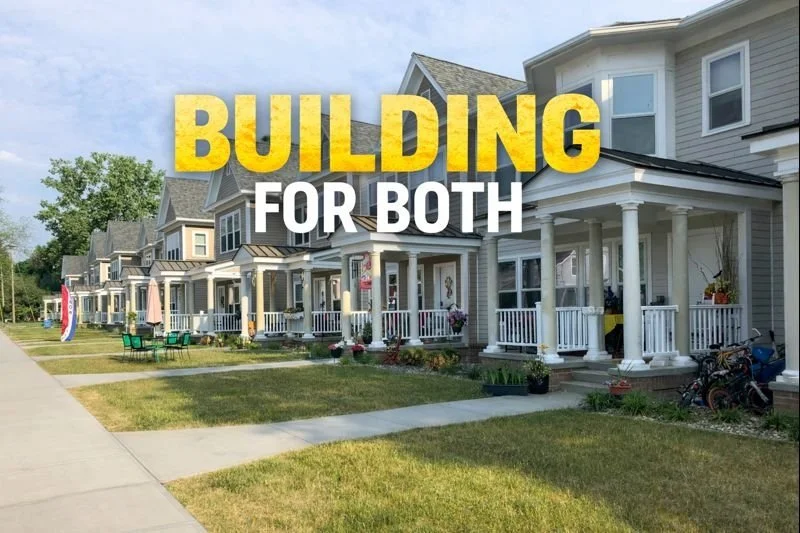
The first half of the “Building for Both” strategy is mitigation—the civic duty to stop contributing to the problem while laying a sound foundation for the future. While Saratoga Springs must adapt to a new climate reality, it has a fundamental responsibility to reduce its own greenhouse gas emissions.
The city has embraced this, setting an ambitious goal to achieve net-zero carbon emissions from its municipal operations by 2050. Like any good builder, the city began by taking stock of its own house, and a 2023 emissions inventory provided a clear blueprint for the work ahead. It revealed one overwhelming problem area: the now-closed Weibel Avenue Landfill, which accounts for a staggering 67% of total municipal emissions as organic matter continues to decay and release methane.
The remaining third comes from the combustion of natural gas in city buildings, the fuel burned by the city's vehicle fleet, and purchased electricity.
The city’s story of civic problem-solving starts with the biggest mess. Given methane’s outsized impact as a potent greenhouse gas, the first priority is to repair the malfunctioning flaring system at the landfill, an action that offers the most significant and immediate opportunity for emissions reduction. From there, the city is methodically cleaning up, room by room. To decarbonize its buildings, it will first conduct comprehensive energy audits to map the precise sources of waste, then systematically transition buildings from natural gas to clean electric alternatives like heat pumps, and finally shift its electricity procurement toward renewable sources.
To reimagine its fleet, the plan is to transition municipal vehicles to zero-emission alternatives, a move that not only cuts carbon but also delivers immediate co-benefits by eliminating harmful tailpipe pollutants like soot from diesel engines and lowering long-term fuel and maintenance costs. Crucially, these strategies are not acts of sacrifice but smart, forward-thinking investments. While the national discourse often frames climate action as an economic burden, Saratoga’s plan reflects the reality that green technologies are a win-win proposition: they create local jobs, save money, and improve public health.
Adaptation
Climate adaptation is the second, equally vital, half of the “Building for Both” imperative. It is the practical work of engineering resilience—preparing residents, infrastructure, and natural systems for the climate realities that are now unavoidable.
If mitigation is about protecting the future from us, adaptation is about protecting us from the future we have already created.
To confront the growing threat of extreme precipitation, the city is strengthening its defenses against flooding. This involves a combination of gray and green infrastructure, from enhancing traditional stormwater management systems to protecting the natural wetlands that absorb and slow floodwaters. These protections will be codified in updated land use ordinances to ensure that future development does not exacerbate flood risk.
The city’s plan recognizes that natural systems are often the most effective form of defense. The same urban forest whose 550 ash trees are now under threat from invasive pests is also the city's first line of defense, a living infrastructure plan to provide cooling shade and absorb the very deluges the city now fears. By preserving and expanding this canopy and other public green spaces, the city leverages vital ecosystem services to build resilience.
Resilience, however, is ultimately about people. The plan includes specific strategies to protect the population from the direct health threats of extreme heat and poor air quality, establishing a robust system of public alerts, accessible cooling centers, and targeted outreach to ensure that the most vulnerable—including the elderly and those with chronic health conditions—receive the support they need.