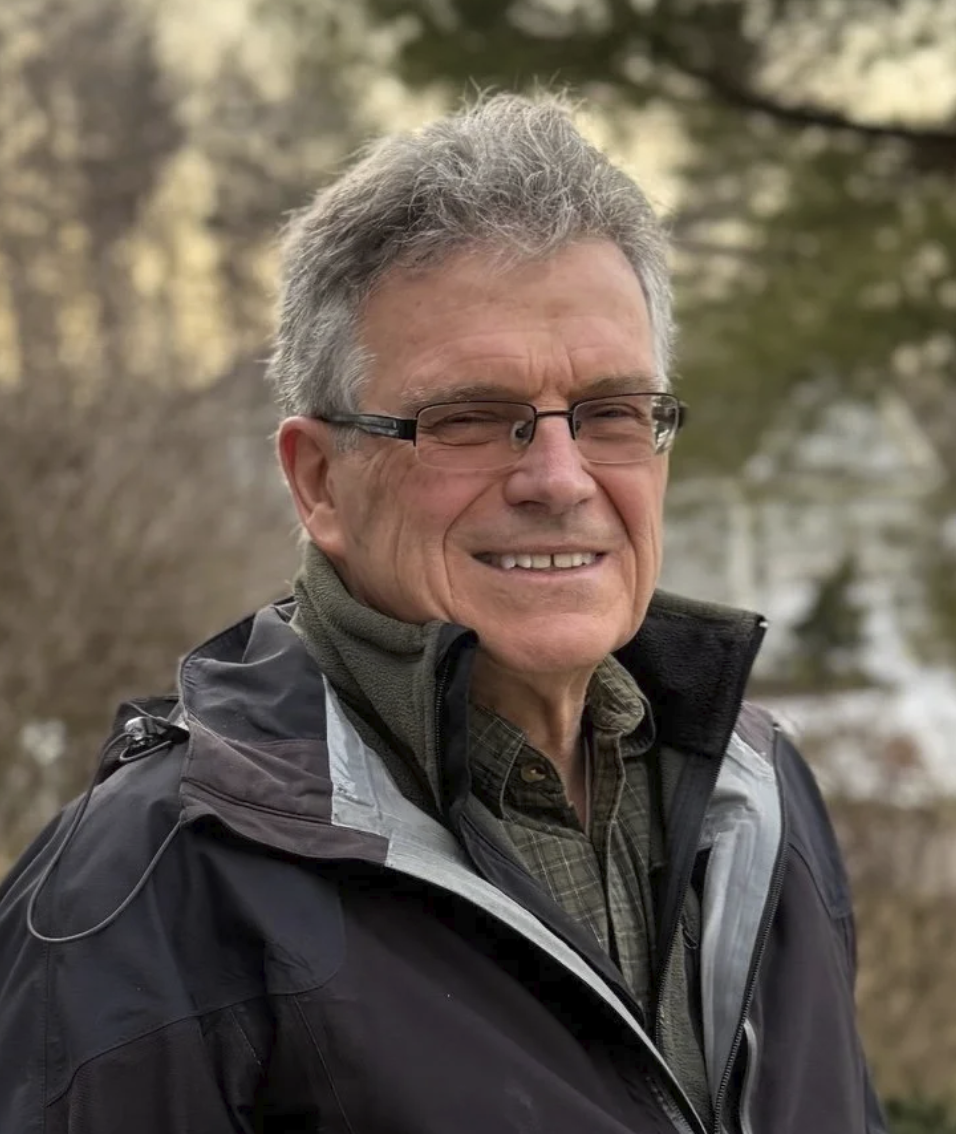
From Supervisor to Storyteller
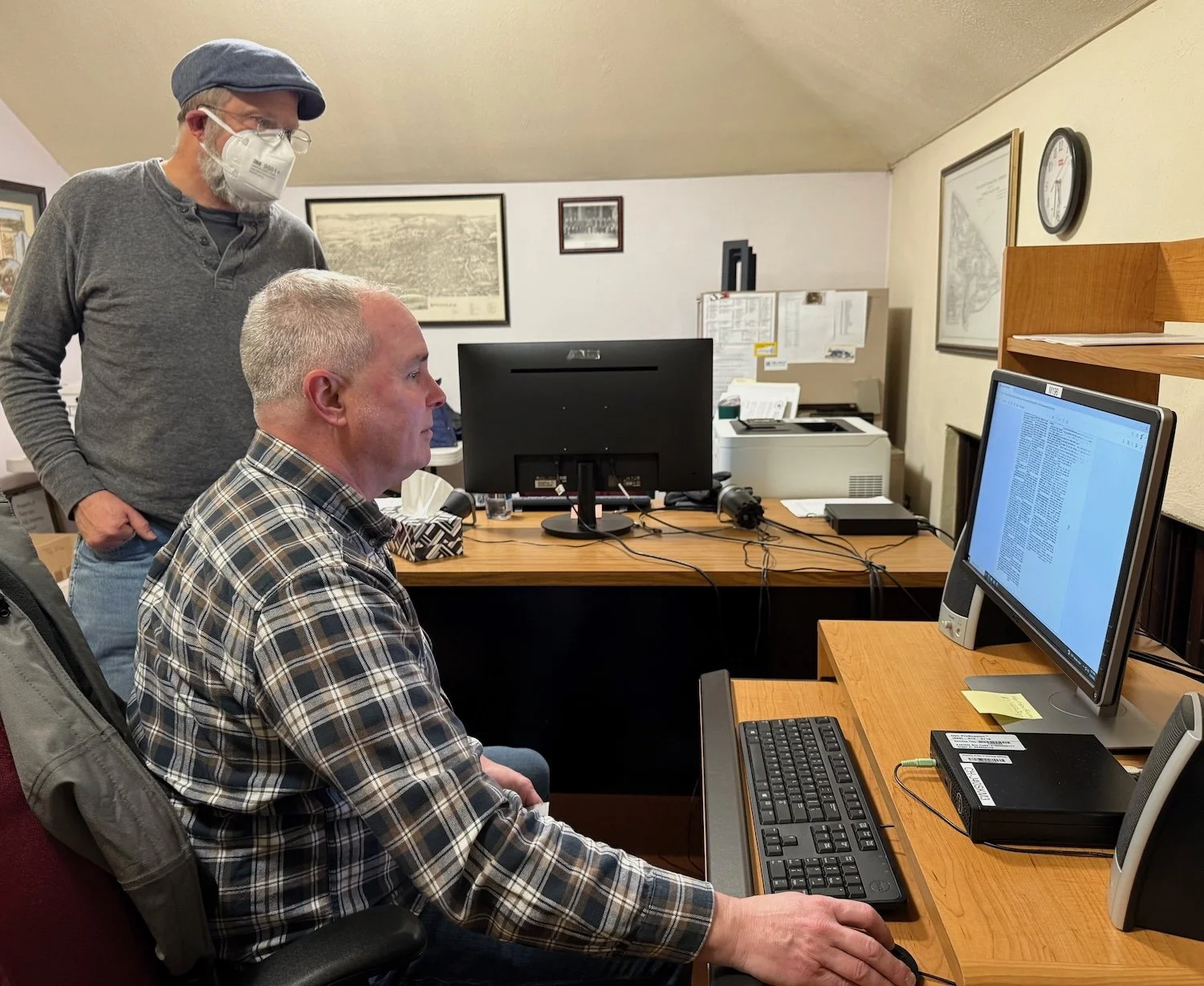
Matt Veitch and Jamie Parillo, Executive Director of the Saratoga History Museum, are exploring ways to collaborate in digitizing photographs, documents, and other records to make them more accessible to the public.
After an 18-year career shaping the future of Saratoga Springs, Matt Veitch is turning his attention to its past. A lifelong Saratogian whose family has been part of the community for five generations, Veitch built a reputation as one of the city’s most pragmatic and respected public servants on the Saratoga County Board of Supervisors. His recent decision to step down prompted Mayor John Safford to call his departure “the end of an era.”
Now, Veitch is embarking on a new chapter as the city’s newly appointed Historian. It’s a transition that moves him from the negotiation table to the city archives, trading the forward-looking demands of budgets and committees for the quiet, meticulous work of preserving community memory. But this new mission is no less ambitious, as he confronts the monumental task of bringing Saratoga’s historical records into the 21st century and making them accessible to all.
For Veitch, the opportunity lies in the intersection of tradition and innovation. He sees Saratoga’s archives not simply as a vault of documents, but as a living resource—rich with stories of civic ambition, social change, hard-won compromises, and the vision of ordinary people who shaped an extraordinary place.
“Our history isn’t something that happened to us,” he has said. “It’s something we built, one decision at a time.”
In this new role, Veitch is applying a lifetime of civic experience and a modernizing vision to the vital work of community memory. As both a product of Saratoga's history and a key figure in shaping it, he is uniquely positioned to ensure the city's stories are not only preserved but are also told, shared, and made meaningful for generations to come.
The Saratoga Torch Club will explore this pivotal transition in a special program, “The Supervisor & the City: An Evening with Matt Veitch,” on Monday, December 15. The conversation will reflect on nearly two decades of public service while looking ahead to his vision for preserving Saratoga’s past in a digital age. It’s a rare chance to hear from a leader who helped shape the city’s future—and is now dedicating himself to safeguarding its history.
A Legacy of Building the Present
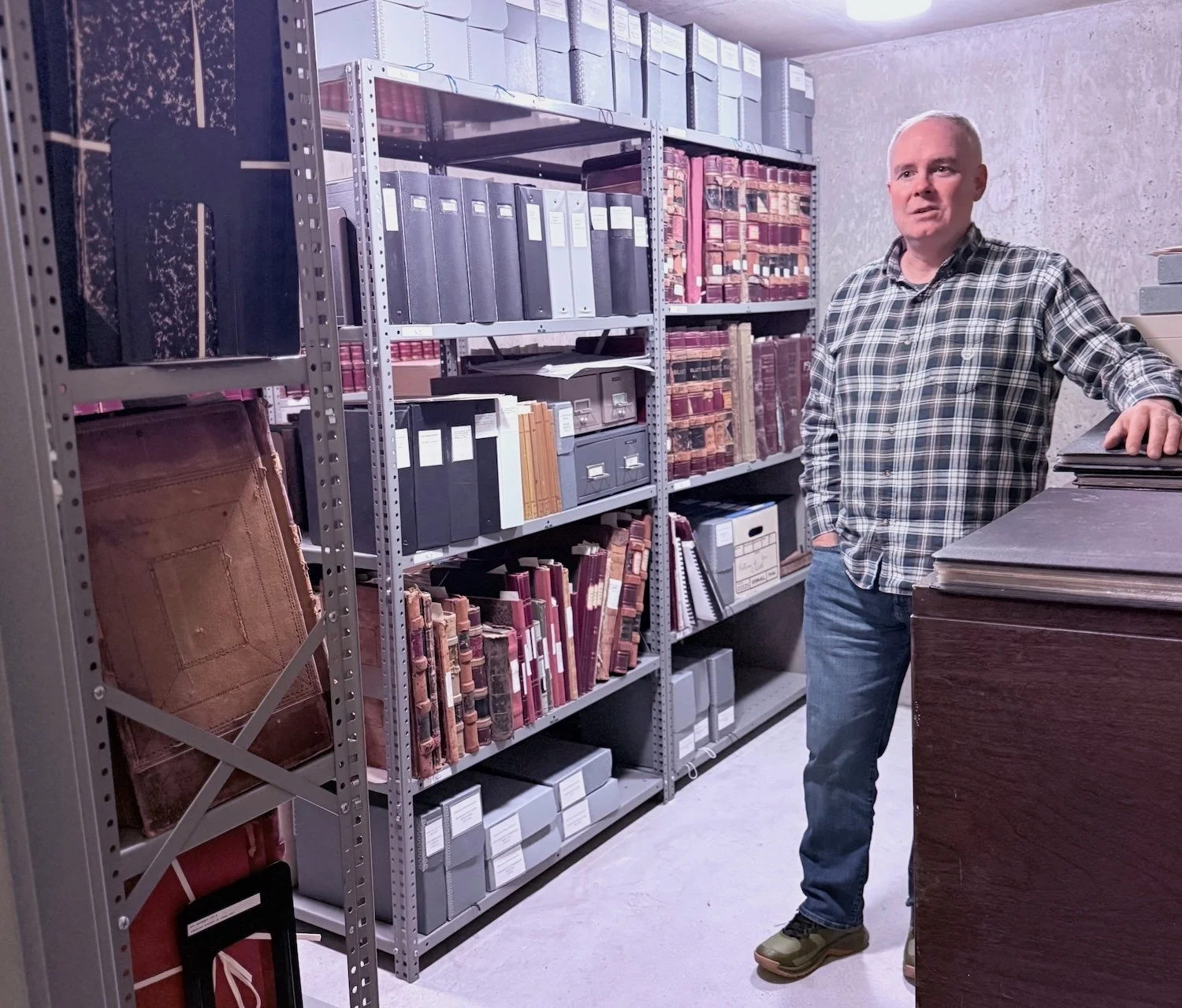
Most of the documents, maps, photographs, and records that Veitch wants to digitize are stored in the City Historians’ vault.
Before stepping into the historian’s office, Veitch established his formidable legacy through pragmatic persistence. During a tenure that began in 2008 and will conclude at the end of 2025, he became known as a leader who knew how to “build bridges instead of barriers.” His political career was sparked by a neighborhood need: the Geyser Road Trail, a safe pedestrian path connecting his community to Saratoga Spa State Park. That initial advocacy became the hallmark of a career defined by playing the long game.
As a “staunch advocate for the development of the county’s vast trail system,” Veitch founded the Saratoga County Trails and Open Space Committee. His approach was rooted in a philosophy he often repeats: “compromise is not a bad word.” The committee’s very existence was a testament to this belief. When he first proposed funding for county trails, he was rebuffed. Instead, he was offered a committee with no budget. He accepted the deal. “If I said, ‘No, I need $250,000’... That would have never happened,” Veitch recalls. By getting a foot in the door, he methodically built the program over the next decade.
This ability to work across the aisle was instrumental in improving city-county cooperation and securing county support for numerous critical city projects, including:
• The city's third fire station
• A new EMS facility
• A permanent Code Blue shelter for the homeless
His steady, solutions-oriented approach made him an influential voice on the county board, where he ultimately rose to Chair. While his public service was defined by tangible achievements in infrastructure and policy, a less-public, lifelong passion for history was quietly shaping his next chapter.
A Passion Rooted in the Past
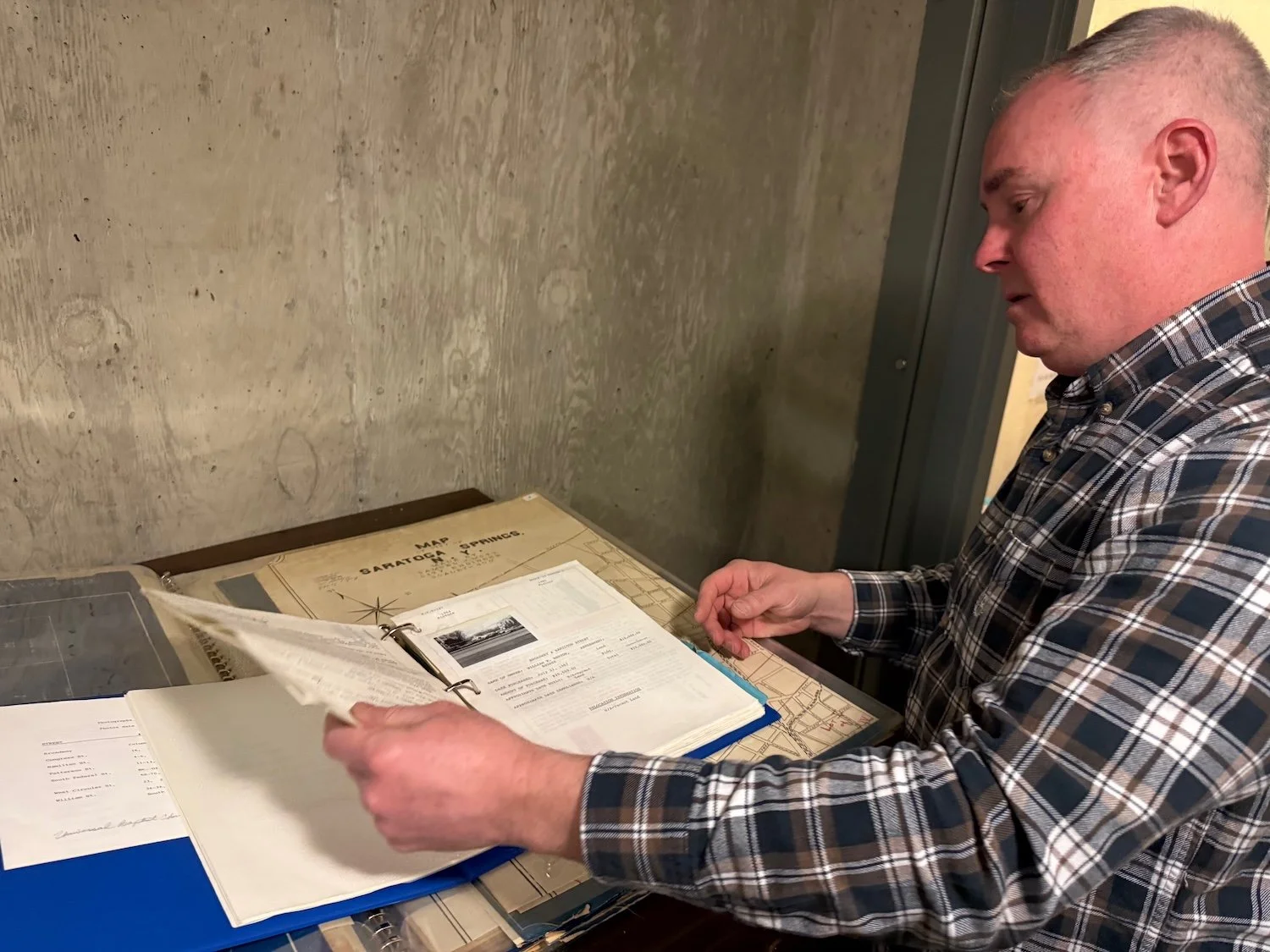
Veitch has a particular interest in digitizing photos and documents that tell the story of urban renewal in the city.
Veitch’s move to City Historian is not a retirement project but the culmination of a deep, personal interest in Saratoga's most complex chapters. For years, he has dedicated himself to researching the city’s urban renewal era (1961–1986), a period with a profound personal connection: his grandfather, Donald Veitch, was the executive director of the Urban Renewal Agency.
This unique vantage point has given Veitch a nuanced perspective on the program’s dual legacy. He acknowledges that the initiative solved chronic infrastructure problems, but he is equally clear-eyed about its human toll. In his own words, while the program brought improvements, “it was devastating to people. Whole families and people who knew each other for many years got displaced.”
His research has focused intently on documenting that human cost, particularly the displacement of the thriving African American community on the city's west side. He has given public presentations detailing the demolition of homes, churches, and beloved Black-owned businesses like Jack’s Harlem Club. This deep and empathetic engagement with the city’s most difficult memories has uniquely prepared him to serve as its official historian, a role where understanding the full, unvarnished story is paramount.
Challenges and Vision
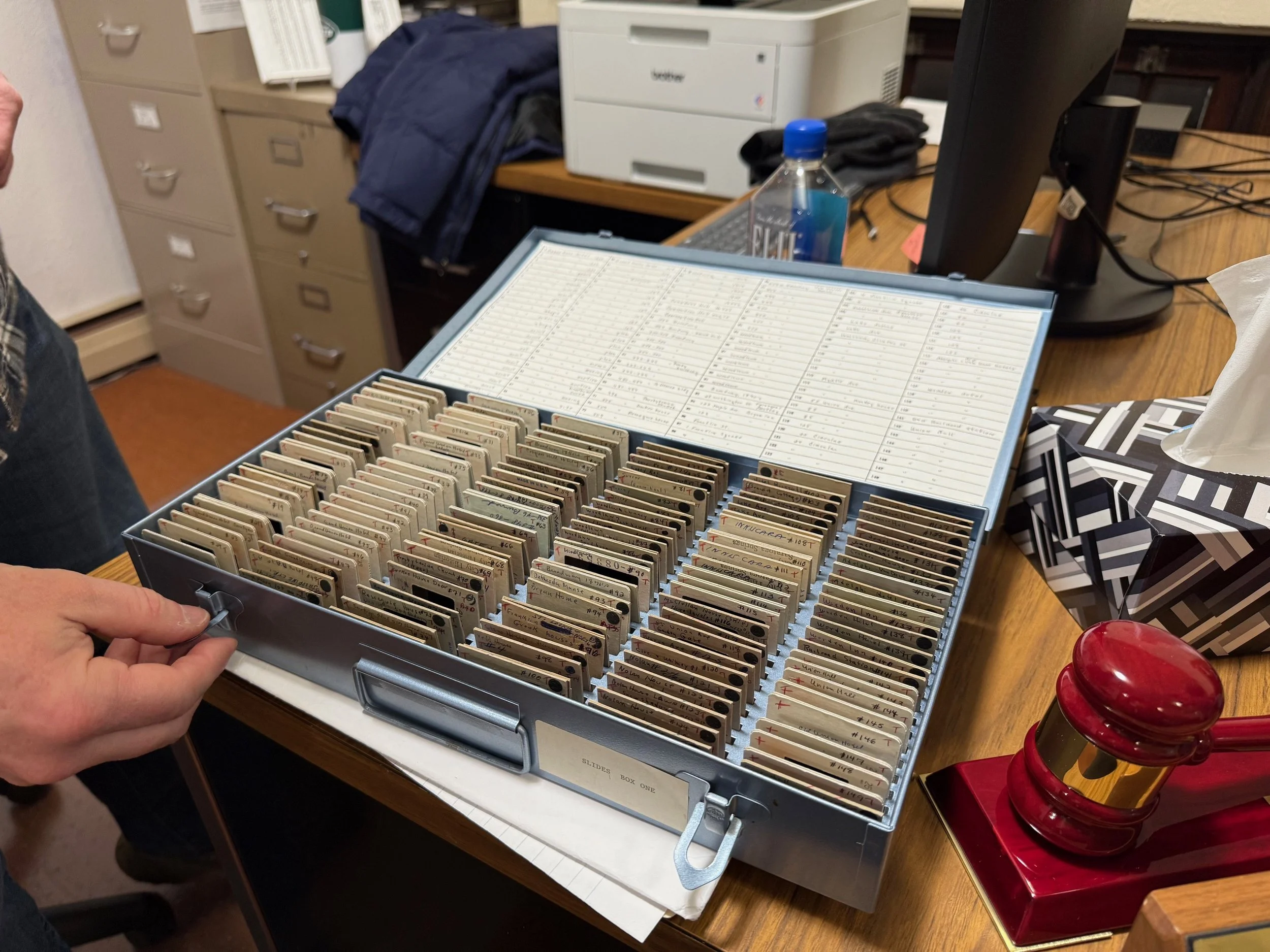
This box of slides is just one of three that Veitch wants to examine, identify, and digitize.
Inside the City Historian’s office at the Visitor Center, surrounded by file cabinets and boxes, Veitch experiences a palpable tension.
“All I want to do is open up all the boxes and see what’s inside,” he says, before adding the historian’s caveat: “and the second part of me is like, I don’t want to touch anything.” Behind a door with an “old school…bank combination” lies a vault filled with the city’s oldest records. The entire collection is a treasure trove, but it is hampered by decades of outdated systems.
As he takes stock, Veitch confronts a monumental task defined by several key challenges:
Outdated and Inaccurate Catalogs: The official Excel file for the archived map collection "needs to be revisited”. Veitch has enlisted the assistance of a volunteer and is reviewing their personal spreadsheet of the collection, which highlights the ad-hoc nature of the current system.
Disorganized Collections: The vast photograph collection is cataloged in a physical card box and "needs to be reviewed and possibly arranged more by category, to enable people to more easily find what they need”. Critical urban renewal pictures are scattered randomly across different drawers, making comprehensive research a daunting, multi-day effort.
Lack of Technical Systems: The office’s technical infrastructure is lagging. While there is a digital document scanner in the office, "it appears to not have been used in some time" and there is currently no shared drive between the two computers in the office, rendering digital workflows inefficient.
Veitch’s mission is to bring the archives into the 21st century. His first project is to transfer the photo card catalog into a searchable Excel file. His broader goal is to digitize documents and photos to “make that available to people without having to come in here.” However, he faces significant budget constraints. Though his salary was increased, the overall office budget was not, effectively cutting his paid hours and leaving little for new projects. The pinch is so tight, he notes, that he has to pay for his own conference registrations. Overcoming these hurdles will require not just ingenuity, but collaboration.
Forging a Collaborative Future for City History
Veitch is not tackling the archives' challenges alone. He is actively building a network of partnerships to bring modern solutions to the city's historical collections. A key collaboration is emerging with Jamie Perillo of the Saratoga History Museum, with whom Veitch shares a goal to make both of their institutions' archives “more accessible.”
This partnership has already yielded an ambitious proposal: using Artificial Intelligence (AI) to catalog the entire city archive once it is scanned. The idea came from Leon Garcia, Perillo's PR director and an "AI wiz," who believes the technology could leapfrog years of manual data entry and solve chronic problems, like volunteers misspelling names in catalogs.
This effort is part of a broader synergy among the region’s historical stewards. Veitch is connecting with a "network of municipal historians" and organizations like the Saratoga Springs Preservation Foundation and the Brookside Museum. This network is currently engaged in preparing for "Saratoga 250," the 2027 celebration of Saratoga's role in the American Revolution, making inter-organizational cooperation more critical than ever. While these high-level plans take shape, Veitch is also ensuring the historian's office is ready to serve the public's immediate needs.
Connecting with the City Historian
The historian's office is located in the Visitor Center. Veitch plans to hold part-time hours, typically "two, three nights a week and every other Saturday “ish.” Meetings are best arranged by appointment. You may contact the office by calling or texting the dedicated cell phone at 518-584-1787 or by email at Matthew.Veitch@saratoga-springs.org.
Among the types of assistance the City Historian can often provide:
• House histories, such as those produced by the Saratoga Springs Preservation Foundation.
• Student research projects
• Family histories and genealogical research
• General research on major events in Saratoga Springs history