

A Tale of Two Climates
We live in strange times. At the federal level, the war on climate science continues with renewed vigor. On the same day Saratoga Springs adopted its science-rooted Municipal Climate Action Plan, a high-ranking national official called for dismantling the National Center for Atmospheric Research, labeling it a hub of "climate alarmism." What unfolds in Washington might seem distant, but its shadows stretch far. Still, in places like Saratoga Springs, the work of climate leadership is taking root—not with bluster or denial, but with quiet resolve, and with science.
This is the story of a city that, while small, is staking out a leadership role in an era when the national narrative has gone haywire. In the face of federal backsliding, Saratoga is leaning into climate action not as a political performance, but as an obligation to its people and its place.
The Stormfront Beyond City Limits
The undermining of climate science has become a staple of national politics. The Trump Administration’s proposal to defund NCAR, justified on the grounds that it spreads “alarmism,” is not a new sentiment—it is merely a louder echo of past efforts to discredit inconvenient truths. Climate change, in this framing, is a story made up by “stupid people,” as the former President once put it.
But NCAR isn’t a fringe institution. Its models help deliver the forecasts that farmers, firefighters, and pilots rely on. Its simulations inform everything from how hurricanes will behave to how crops might fare. When you tear out this infrastructure, you don’t just silence scientists—you blindfold communities.
And yet, in Saratoga Springs, the weather is still changing. The air is still warming. The stakes are not abstract—they are written into the daily rhythms of life. That is the reality the city is facing head-on.
Science in the Soil: Saratoga’s Grounded Approach
Saratoga’s plan doesn’t begin with ideology—it begins with the data. The MCAP leans on regional climate models that zoom in on the city’s own backyard, using localized weather data and projections specific to the North Hudson region. The result is a set of future scenarios that are not speculative—they are all too real.
By mid-century, the city will see between 8 and 19 days each summer above 95 degrees Fahrenheit—a stark rise from the single day that was typical in the past. Winters will be warmer and wetter, with precipitation up 7 to 21% and more of it falling as rain or ice. That means more flooding, more ice storms, and less of the cold that once kept invasive pests in check.
These changes hit home in very specific ways. Racing days at Saratoga’s iconic track could be canceled due to heat. Tourism will suffer when snow becomes unreliable. Tornadoes, once rare, are becoming a seasonal feature—32 struck New York State in 2024 alone. And smoke from distant wildfires, carried on summer winds, has already choked the city in recent years.
These are not tomorrow’s problems. They are today’s.
Blueprints for a Livable Future
If the problem is immediate, the city’s response is proportionate. The MCAP’s vision is unapologetically bold: Net-zero municipal emissions by 2050. But the strategy is detailed and rooted in what can be done now.
First comes decarbonization. The Weibel Avenue Landfill alone accounts for two-thirds of city emissions. Its methane flare—a basic piece of emissions control equipment—hasn’t functioned properly for years. Fixing it is low-hanging fruit with high return. The city’s building stock and vehicle fleet follow closely behind, with plans to switch to heat pumps and electric vehicles, powered by renewables.
Then comes resilience. Expanding the urban forest to cool streets, protect biodiversity, and sequester carbon. Upgrading infrastructure to handle flooding. Investing in safe pedestrian and bike routes to reduce dependence on cars.
And finally, policy. A Green Transition Fund is proposed to underwrite this work—not a wish list, but a financial structure grounded in local funding mechanisms: host community payments from the Champlain Hudson Power Express, a future real estate transfer tax, sale of renewable energy credits. This isn’t a handout model. It’s Saratoga investing in Saratoga.
The Reality Check
None of this, of course, will stop the seas from rising. That’s the hard truth. A city can electrify its bus fleet, but it can’t halt global oil production. Local action matters immensely, but it cannot substitute for a coherent national plan.
The Inflation Reduction Act was a start—but the specter of its rollback hangs heavy. Proposals like the so-called "One Big Beautiful Bill" seek to erase progress and discredit climate policy as economic sabotage. The science, once dismissed, is now under siege.
What Saratoga shows is that cities don’t have the luxury of waiting. The climate doesn’t pause for elections. The floodwaters won’t recede because a budget got cut in Washington. And so, local leadership becomes not just a moral stand—but a practical one.
Seven Generations Out
The Haudenosaunee principle of the Seventh Generation offers a compass: make decisions today that will benefit those seven generations from now. It is a lesson we are late to learn, but one Saratoga seems determined to apply.
By putting science first, by treating climate action as stewardship rather than sacrifice, by building systems that will outlast the headlines, Saratoga Springs isn’t just leading locally. It is modeling the kind of thinking that might yet redeem a fractured national conversation.
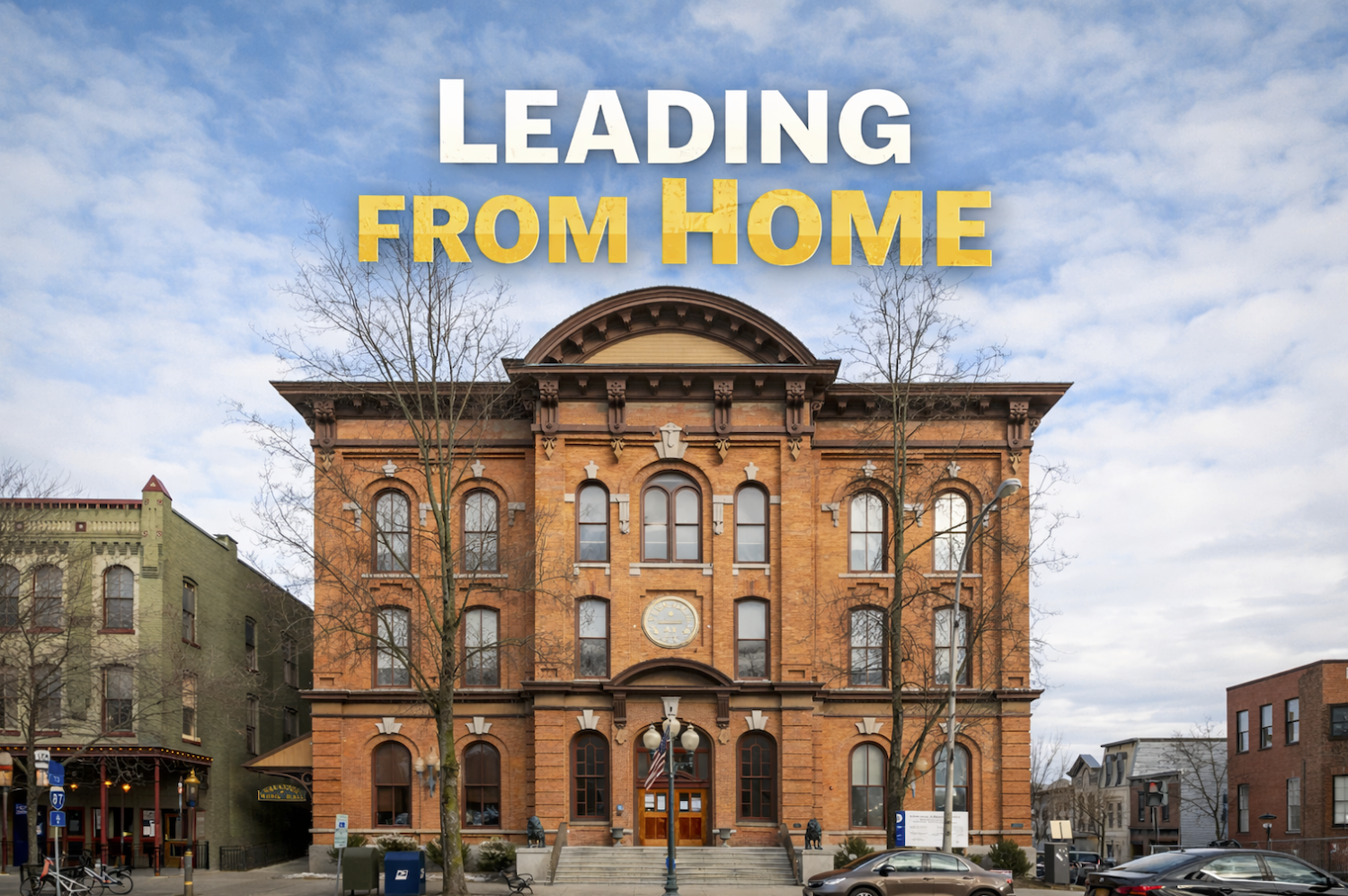
The city is showing how to lead from home—not because it’s easy, or because the math pencils out neatly, but because the alternative is to drift, untethered, into a future we failed to prepare for. That is a future Saratoga Springs refuses to accept.