


Chapter One
By Greg Veitch
In the Smartacus Story Accelerator
On the morning of January 28, 1902, Caleb Mitchell walked into Saratoga Springs Village Hall carrying a .32-caliber revolver he had purchased only minutes before at Towne's Hardwareon Broadway. A clerk namedGeorge Wentworth had sold it to him.
“I’ve got noisy cats outside my window,” he had explained. “They’re a problem.”
Three times Mitchell had been elected mayor of Saratoga Springs, but by that winter he was increasingly at odds with the arrangements that governed the city’s most profitable activities. He crossed Broadway, entered the building, heading straight for the office of state Senator Edgar T. Brackett – but Brackett was not there. Just minutes before he had left for Albany.
Mitchell waited in the hallway. A janitor saw him pacing, hands in his coat pockets, moving back and forth in front of the office door. Nothing in the scene suggested urgency.
Then there was a sound – a single gunshot.
A young attorney named James Leary opened the door and found Mitchell on the floor, the revolver beside him. He was dead with a bullet in his head.
It appeared that Mitchell had come not only to end his own life, but to take Brackett’s as well. There was reason to think so, given the animosity that had built up over the years between the two men.
On one hand, Mitchell was a public official—elected, visible, and accountable to voters. On the other, he was an operator of gambling establishments that did not attempt to disguise themselves as anything else. His poolrooms were known. They were frequented. They were part of the city’s economy – but they were also a problem.
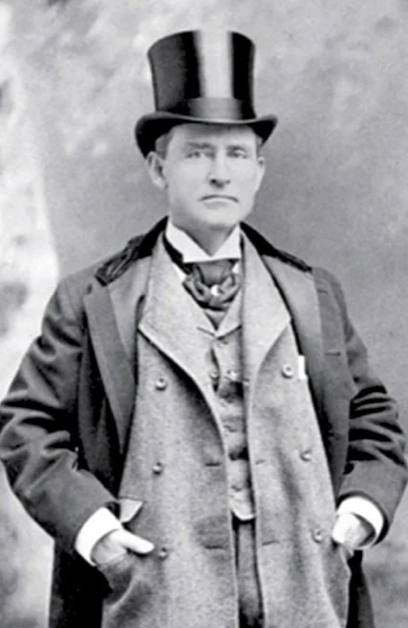
Caleb Mitchell
Gambling: Fashionable and Not
Saratoga did not object in principle to gambling. It had long accommodated it, and in certain forms, celebrated it. The problem lay in the type of gambling Mitchell conducted, and the people who participated in it. His establishments were accessible. A man with a small amount of money—a coin, a bill—could enter and place a wager. This was not how gambling in Saratoga was supposed to be conducted.
Alongside Mitchell’s operations, there was another form of gambling which was practiced in clubhouses, where the conditions of entry were closely controlled, the surroundings were more refined, and the clientele carefully selected.
Senator Brackett made the distinction clear. Mitchell’s poolrooms, he said, were not merely illegal; they were degrading. Tobacco-stained, uncarpeted, crowded with the wrong sort of patron. They represented, in his view, not just a violation of law, but a lowering of standards—an intrusion of the unregulated into a system that depended on control.
Mitchell did not accept this distinction. If gambling was to exist in Saratoga—and it plainly did—he saw no reason why it should be confined to those with means, or conducted only in spaces that preserved the appearance of exclusivity. He stated his position plainly and loudly: What was permitted for one class should be permitted for another.
Not all agreed, and so police shifted their attention. Poolrooms were raided. Patrons were questioned. The pressure did not fall evenly across all establishments. It fell where intended.
Also irksome to Mitchell: The structure of local government was altered. New legislation backed by Brackett removed the direct election of Saratoga’s mayor, transferring that authority to a board that was aligned fully with him. Although Mitchell had been the peoples’ choice for mayor, he was fired without a vote.
Mitchell’s response was to hire a detective to develop charges against Richard Canfield and force the matter into the open—the system adjusted again. Laws were proposed, and nearly passed, that would have ensured that such efforts could not succeed in the future.
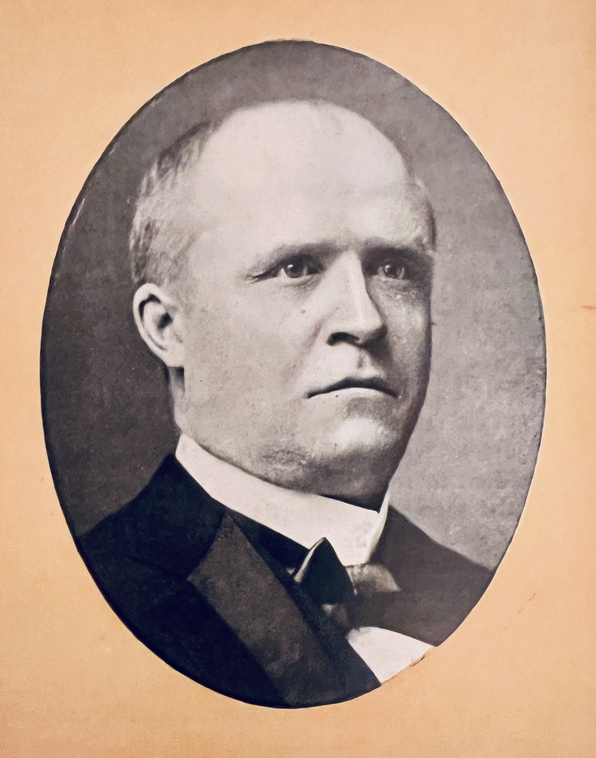
Edgar T. Brackett
The Summer of 1926
What emerges from these actions is not a conflict between legality and illegality, but a distinction between two forms of the same activity—one controlled, the other not.
Mitchell’s error was not that he gambled. It was that he did so without regard for the system that determined who could.
By the winter of 1902, the consequences of that error had accumulated. Mitchell had been deposed as mayor. His business had been diminished. His attempts to challenge the structure that opposed him had failed. Now he was outside the system he once had managed. This brings us back to the body that Jim Leary found with a bullet in his head.
The summer that followed was, by most accounts, a successful one. Visitors arrived. Money flowed. Gambling continued, in forms that were, if anything, more carefully arranged than before. Leary remained, learning, observing, and, in time, managing the structure that kept Saratoga running.
In the years that followed, Saratoga perfected what might be called a balance between visibility and restraint. Activities that would have drawn attention elsewhere were conducted here with a confidence that suggested they were not subject to interruption. The distinction between what was known and what was said was maintained with consistency.
Until, in the summer of 1926, Peter Finley decided to alter that balance. He had observed the same conditions that others had observed. He had seen the same patterns, the same arrangements, the same willingness to allow certain activities to proceed without interference.
Everyone knew what Finley knew, but it was Finley who decided to do something about it. On July 23, he sat down and wrote a letter to Governor Al Smith.
Placeholder pending our
finding an actual photo of
Peter Finley.
We’ll Drop Chapter Two on July 23
In the meantime, we’ll task our Smartacus tools with writing weekly installments that take us back to the start of organized gambling in Saratoga Springs.