An Evening with Frederick Douglass
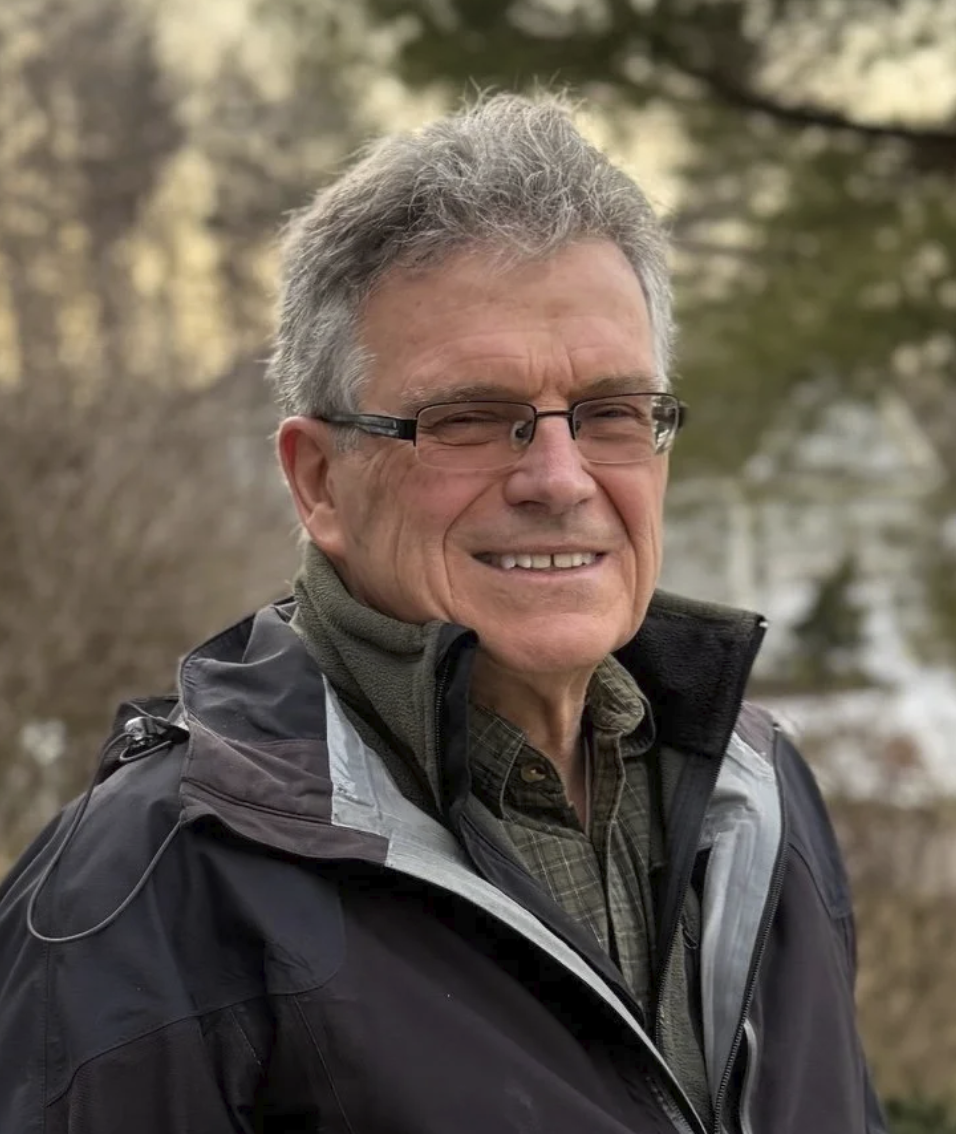
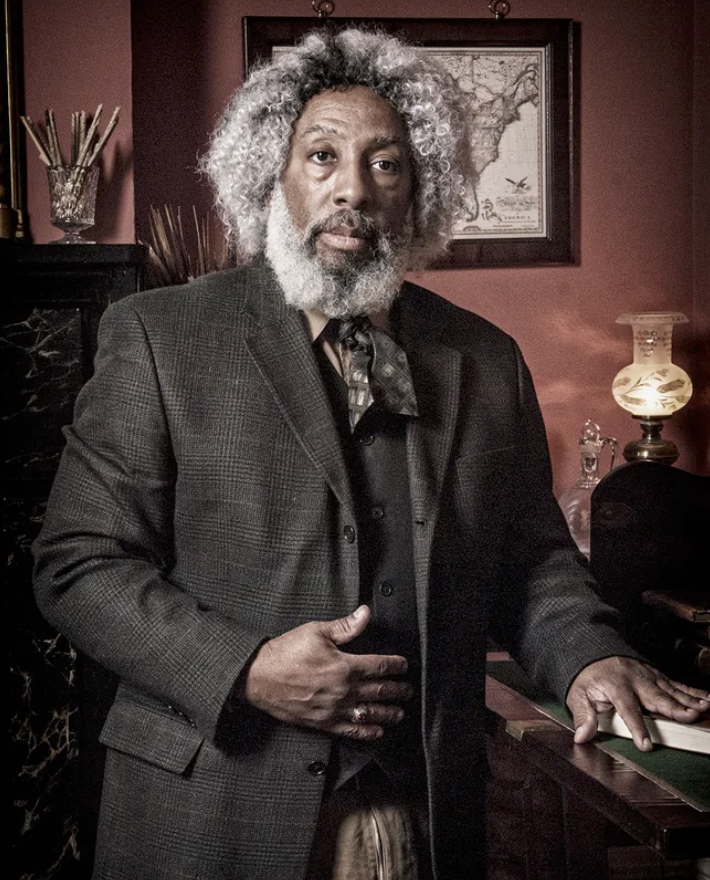
The Saratoga Torch Club hosted a public dinner and historical program on Nov. 17 featuring Nathan M. Richardson, a Virginia-born poet and educator known for his first-person interpretation of Frederick Douglass. The event took place at the Saratoga Springs Holiday Inn, drawing members of the club and local residents.
Mr. Richardson has performed as Frederick Douglass for 13 years at museums, schools, community institutions and civic forums. His program incorporates long-form sections of Douglass’s speeches, biographical narrative and a moderated question-and-answer session presented entirely in character. He has researched Douglass’s life and writings and performs up to 13 major speeches from Douglass’s career, including his interpretation of “What to the Slave Is the Fourth of July?”
The Saratoga Torch Club is a local chapter of the International Association of Torch Clubs, an organization founded in Minneapolis in 1924. The club hosts monthly dinner programs on civic and scholarly topics.
A Full Biographical Narrative
Mr. Richardson’s appearance in Saratoga Springs presented a structured narrative of Douglass’s life. Speaking in the first person, he covered Douglass’s childhood in Talbot County, Md., where he was born into slavery around 1818 and separated from his mother at an early age. He described conditions typical of enslaved children in the Chesapeake region, including food rations and limited clothing.
Mr. Richardson recounted Douglass’s transfer at age 8 from rural Maryland to the household of Hugh and Sophia Auld in Baltimore. According to Douglass’s own writings, Mrs. Auld initially taught him the alphabet, before being ordered to stop. He then continued to learn by trading food for informal lessons from local schoolchildren and observing shipyard markings while working at the Baltimore docks.
Escape and Life in New Bedford
The performance detailed Douglass’s later assignment to Edward Covey, a Maryland farmer whose role was to discipline enslaved laborers. Douglass later wrote that this period was a turning point in his resistance to slavery. In 1838, while working as a ship caulker in Baltimore, he escaped by rail and boat using borrowed sailor’s papers. His escape was aided by Anna Murray, a free Black woman who later became his wife.
After reaching New York, the couple settled in New Bedford, Mass., under the name Johnson. He later adopted the surname “Douglass,” a spelling suggested by a local acquaintance based on a character in Sir Walter Scott’s The Lady of the Lake. While living in New Bedford, he became involved with William Lloyd Garrison and the Massachusetts Anti-Slavery Society.
Abolitionist Work and International Travel
Mr. Richardson outlined Douglass’s early career as an abolitionist speaker, which included a speaking tour beginning at the 1841 antislavery convention in Nantucket. Some attendees questioned whether he had been enslaved, prompting Douglass to publish his first autobiography, Narrative of the Life of Frederick Douglass, an American Slave (1845).
Following publication, Douglass spent approximately two years in Ireland and Britain to avoid being seized under fugitive slave laws. In 1846, British supporters raised funds to purchase Douglass’s legal freedom for $733.13 (approximately equal to the statutory price set by his former slaveholder). Douglass returned to the United States in 1847 and moved to Rochester, N.Y., where he established the abolitionist newspaper The North Star.
Relationships With Leading Figures
The Saratoga program referenced Douglass’s relationship with Garrison and his evolving view of the United States Constitution. Douglass initially agreed with Garrison that the Constitution was a pro-slavery document, but later argued the opposite, stating publicly that it could be interpreted as a “liberty” document when read literally and amended through constitutional processes.
Mr. Richardson also referred to Douglass’s brief collaboration with John Brown. In the late 1850s, Brown stayed at Douglass’s home in Rochester while preparing plans for the raid on Harpers Ferry. Douglass declined to participate in the raid and later stated that he believed it would not succeed.
The program noted Douglass’s participation in the Seneca Falls Convention of 1848, where he was one of 32 men to sign the Declaration of Sentiments supporting women’s rights. His support continued through Reconstruction and after.
Civil War and Public Advocacy
Mr. Richardson presented Douglass’s meetings with President Abraham Lincoln during the Civil War. Douglass advocated for equal pay for Black soldiers, the commissioning of Black officers, and the humane treatment of Black prisoners of war. His sons Charles and Lewis Douglass enlisted in the 54th Massachusetts Volunteer Infantry in 1863.
Douglass supported the Emancipation Proclamation and later the passage of the 13th, 14th and 15th Amendments to the Constitution. After the war, he accepted several appointed positions, including presidency of the Freedman’s Savings Bank, U.S. Marshal for the District of Columbia (appointed in 1877), and Minister Resident and Consul General to Haiti (1889–1891). The Freedman’s Bank collapsed in 1874 due to earlier mismanagement, despite Douglass’s attempts to stabilize it.
A Historical Speech Recreated
During the Saratoga event, Mr. Richardson recited an excerpt from Douglass’s 1876 “Oration in Memory of Abraham Lincoln,” delivered at the dedication of the Emancipation Memorial in Washington, D.C. In the speech, Douglass described Lincoln primarily as “the white man’s president,” while crediting him with preserving the Union and enabling emancipation through wartime actions.
Questions From the Audience
After the performance, Mr. Richardson remained in character and responded to questions about Douglass’s reading habits, his work as a newspaper editor, and his views on democratic participation. Audience questions covered Douglass’s use of The Columbian Orator as a study text, his distribution of The North Star through the Erie Canal, and his view of civic responsibility.
In response to a question about democracy, Mr. Richardson cited Douglass’s “four boxes” metaphor — the soap box (public speech), the jury box (justice), the ballot box (voting), and the cartridge box (armed defense) — as framework Douglass used to describe the elements of participatory citizenship in the United States during his lifetime.
Continued Performances
Mr. Richardson performs regularly at public institutions, including libraries, historical societies, schools and veterans organizations. He is recognized as a Chautauqua scholar in the national network of historical interpreters. His performances emphasize documented episodes from Douglass’s autobiographies and public speeches, combined with direct audience engagement.
The Saratoga Torch Club announced that it will continue its public event series through the winter. Upcoming programs are scheduled to address journalism and education.