Positive Freedom: How Young People Become Capable of Directing Their Own Lives
A Conversation with Philip A. Glotzbach
Students often arrive at college with a simple expectation: pay tuition, complete the requirements, and leave with a credential. It is a practical assumption, reinforced by a culture that measures education in terms of outcomes and return on investment. Yet this way of thinking, while understandable, captures only the surface of what higher education can offer.
Philip Glotzbach, Skidmore College President Emeritus, has described this outlook as the “ATM model” of college.
“We have a very transactional culture these days… and I think it’s produced what I call the ATM model of college. You spend four years making deposits into the slot, and then four years later you withdraw a certificate. That’s a pretty thin view of what college can be all about.”
The metaphor resonates because it is accurate. An ATM performs its function efficiently, but no one expects it to shape their character. College, at its best, does something different. It offers a structured period in which young adults can test their values, their ambitions, and their sense of purpose while still supported by a community designed for growth. The real question of college, then, is not simply what students learn, but what they learn about themselves while learning it.
Freedom is the “Capacity to Do Something Meaningful”
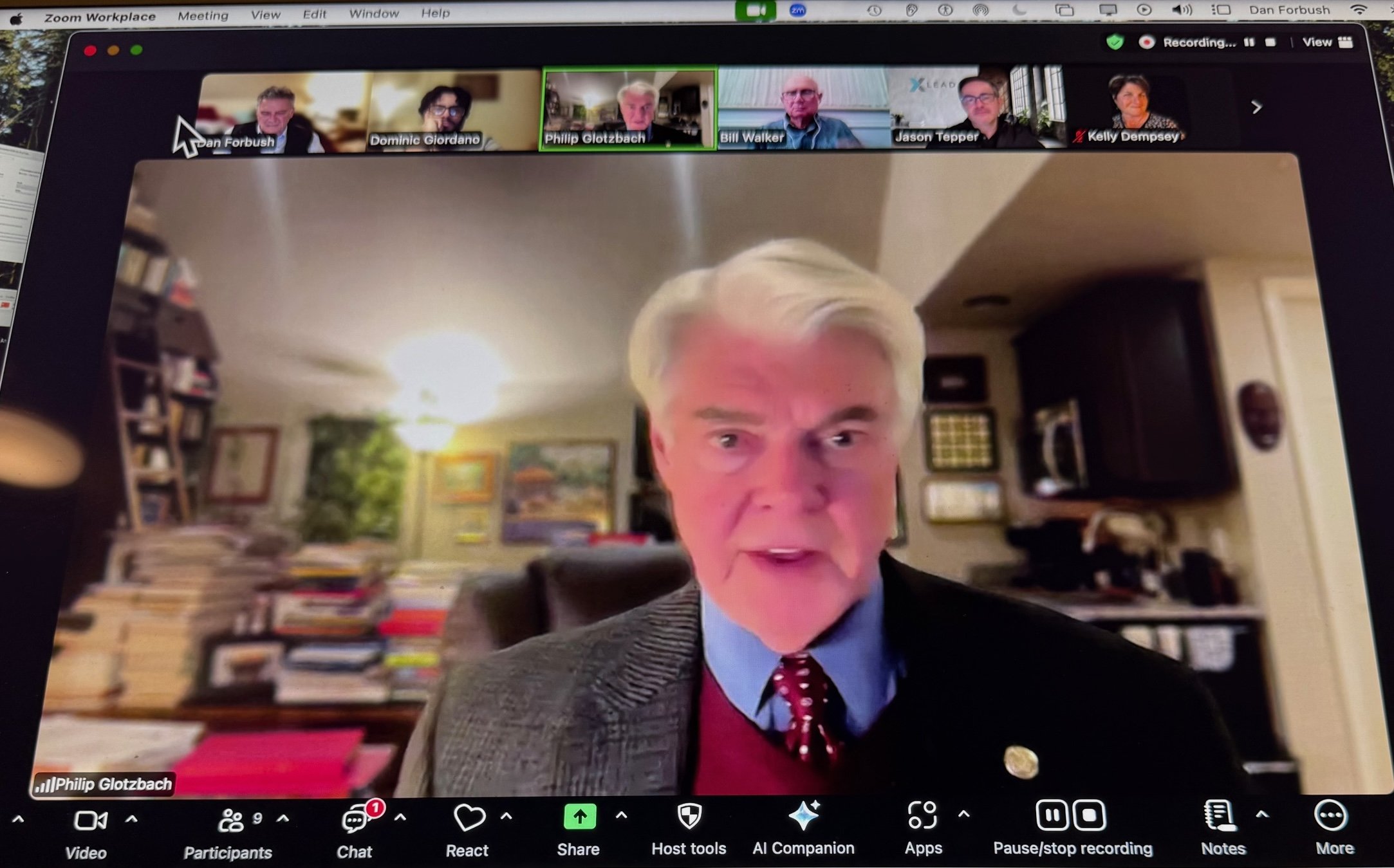
Members of the Saratoga Torch Cluband Saratoga AI joined Philip A. Glotzbach Monday night for the first installment of Torch Radio, a weekly series of Civic Conversations to which we invite the public. This is a demonstration of the suite of AI tools we combine in the Smartacus Story Accelerator.
For Glotzbach, the answer revolves around freedom — not the casual version students often imagine, but a more demanding one.
“Freedom isn’t just the absence of rules. It’s the capacity to do something meaningful.”
This distinction matters. Freedom understood as independence alone offers options, but not direction. The deeper form of freedom — the freedom to achieve something worthwhile — emerges only through discipline, relationships, and responsibility. It is less a gift than an accomplishment.
To illustrate the difference, Glotzbach sometimes contrasted the unconstrained individual with the astronaut who has endured years of preparation.
“The astronaut submits to extraordinary limits, but those limits are what give them the ability to do something extraordinary.”
College, in this light, is not primarily about removing constraints. It is about developing the capacities that make freedom usable.
This perspective shapes his understanding of the liberal arts. Rather than viewing them as a catalogue of subjects, he treats them as a way of learning how to think.
“The problems you’re going to face won’t come labeled ‘history’ or ‘biology’ or ‘economics.’ They’ll require you to think across those boundaries.”
“The Danger is that We Stop Thinking Ourselves”
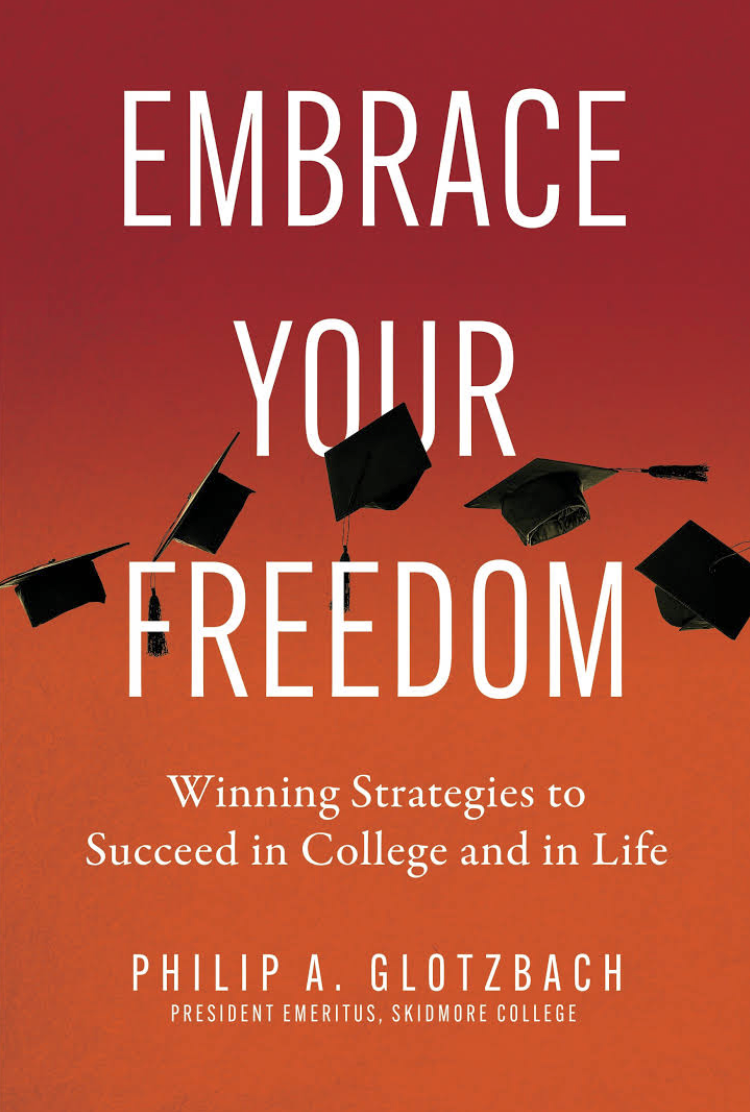
This is the book in which Glotzbach shares lessons learned in his 17 years as Skidmore’s president. He retired in 2020.
Modern challenges — climate change, technological disruption, political division — resist simple solutions. They require the ability to connect knowledge from multiple domains and to hold competing perspectives in tension. The value of a liberal education lies precisely in cultivating this agility.
Glotzbach often compares the undergraduate degree to a milestone rather than a conclusion.
“Earning a degree is like earning a black belt. It doesn’t mean you’ve finished learning. It means you’re finally ready to begin.”
The image reframes college as preparation rather than completion. Its purpose is not to produce finished experts but capable learners — individuals who can continue to grow long after formal schooling ends.
In recent years, this idea has taken on new urgency. Digital tools now make it possible to outsource not only information retrieval but aspects of thinking itself. Glotzbach does not reject technology, but he worries about its unexamined use.
“The danger isn’t that technology exists. The danger is that we stop doing the thinking ourselves.”
When writing is replaced by automated summaries, or reflection by algorithmic suggestions, students risk losing ownership of their intellectual processes. Education, in this context, must do more than transmit knowledge; it must preserve the habits that make independent judgment possible.
“If you outsource the work of thinking, eventually you lose the ability to evaluate what you’re given.”
For Glotzbach, the challenge of the digital age is therefore not technological but human. Colleges must teach students how to use tools without surrendering to them.
Yet education is not only an individual process. It is also social. One of the most formative aspects of college, he argues, is the encounter with people whose backgrounds and assumptions differ from one’s own.
A College Education is “About What What You’re Able to Do”
“Real learning happens when you encounter someone who sees the world differently from you.”
Such encounters can be uncomfortable, but that discomfort is precisely what makes them valuable. They force individuals to examine their assumptions, reconsider their reasoning, and develop a deeper capacity for empathy.
“A good college doesn’t eliminate disagreement. It teaches you how to live with it intelligently.”
The goal is not consensus but maturity — the ability to engage difference without retreating into certainty or hostility. In this sense, education becomes preparation not just for professional life, but for democratic life as well.
Glotzbach often reminds students that the undergraduate years represent a rare developmental window.
“This is one of the few times in life when you can experiment with who you are going to be, and still have a community around you that expects you to grow.”
That expectation is crucial. Education works best when students treat it not as something delivered to them but as something enacted by them — a set of choices about how seriously to engage the opportunities before them.
Ultimately, his philosophy returns to a simple insight.
“A college education isn’t about what you collect. It’s about what you become able to do.”
Positive freedom, in this sense, is not conferred by a diploma. It emerges through practice — through the cultivation of judgment, the willingness to engage complexity, and the readiness to act responsibly among others.
For those who approach college with intention, the experience can become less a transaction than a transformation. The degree marks an achievement, but the deeper accomplishment lies in the habits formed along the way: the discipline to keep learning, the humility to revise one’s views, and the judgment to use one’s freedom well.
Thanks to the Smartacus Story Accelerator