In Face of AI and Anxiety, Philip Glotzbach Makes the Case for Liberal Education
As artificial intelligence reshapes industries, public trust in institutions declines, and higher education faces growing skepticism about its value, Philip Glotzbach stood before the Saratoga Torch Club at the Holiday Inn Saratoga Springs to make an argument that sounds almost old-fashioned in today’s transactional culture: the idea that college should help human beings learn how to think, how to live, and how to participate responsibly in a democracy.
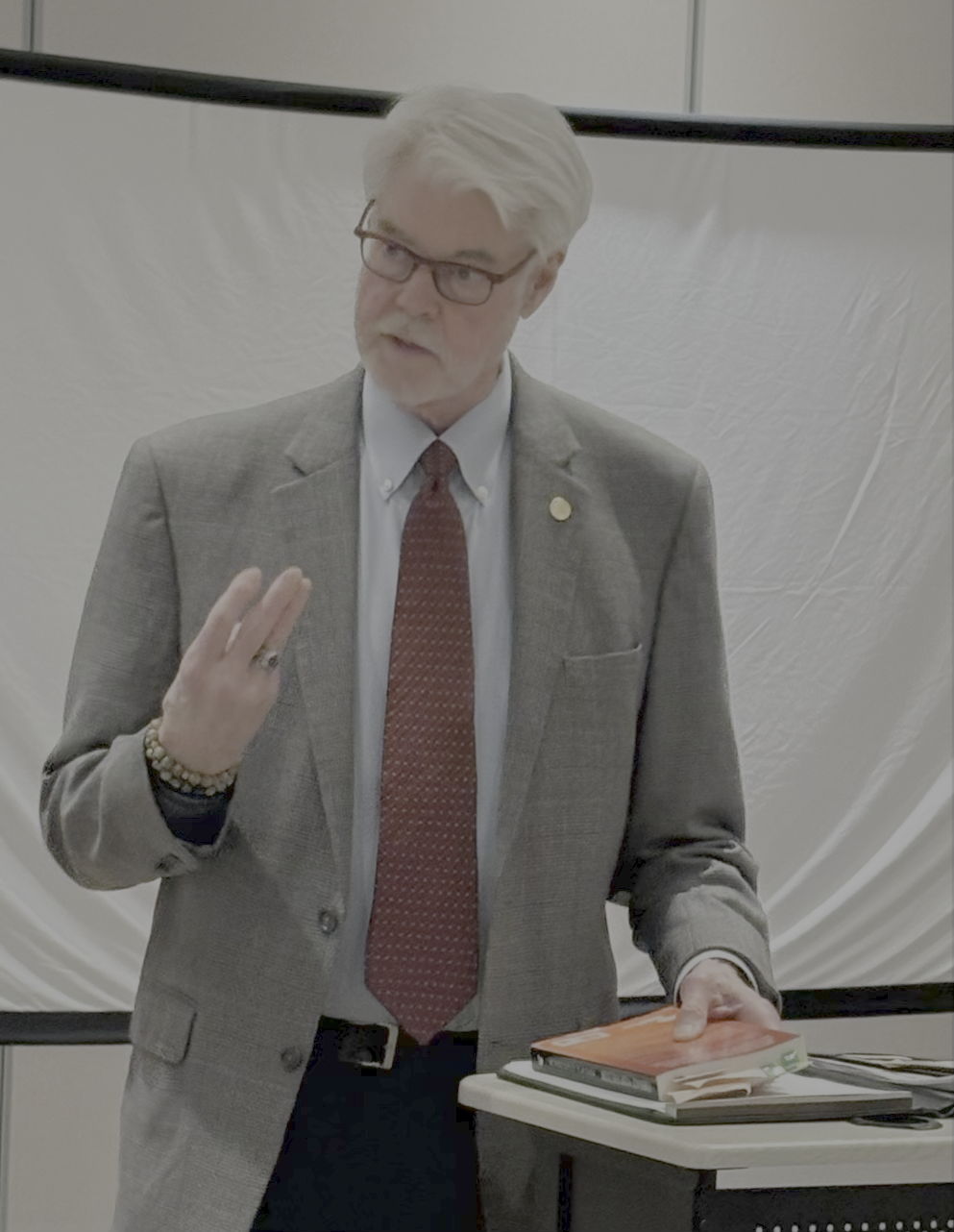
Philip Glotzbach
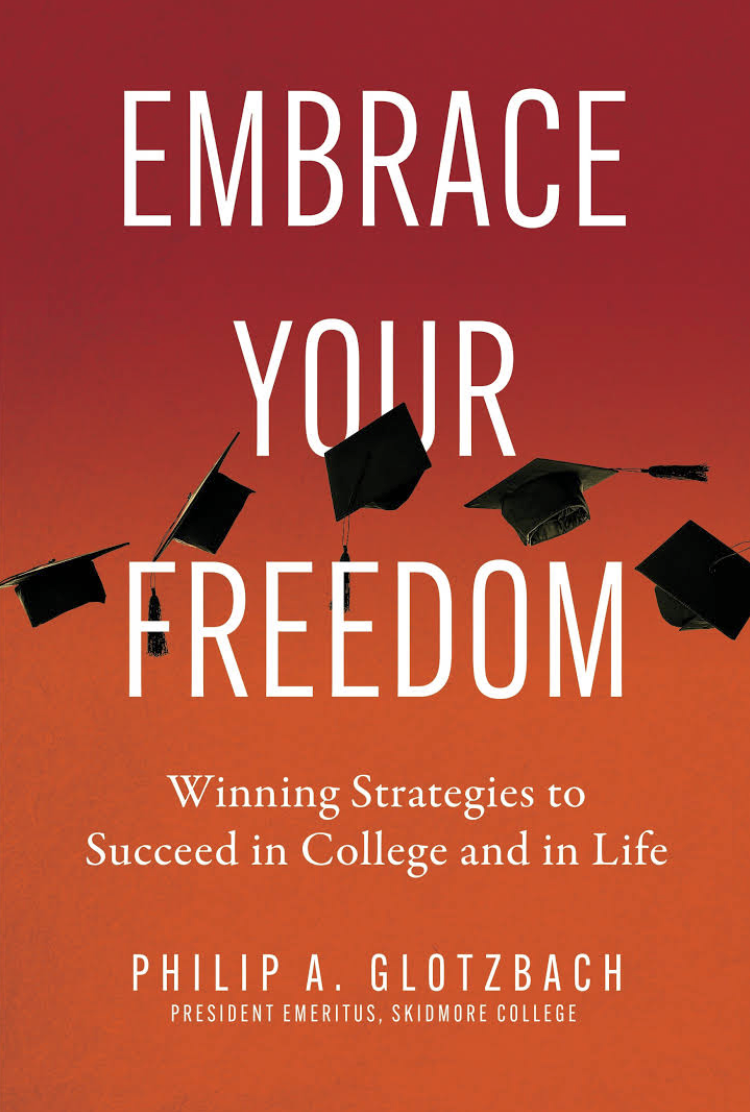
Glotzbach, President Emeritus of Skidmore College and author of Embrace Your Freedom: Winning Strategies to Succeed in College and in Life, framed his talk around a concern that reached far beyond campuses. Young people today are inheriting a world marked by climate change, political polarization, civic distrust, and technological disruption on a historic scale, he said.
“I think everyone of the older generation should go find a college student or a high school student, go up to them and apologize because they are going to have to deal with the world we’re leaving to them.”
Wrestling With ‘Wicked Problems’
Much of the evening centered on what Glotzbach described as “wicked problems” — sprawling, interconnected challenges that cannot be solved through simple formulas or repetitive practice. Unlike learning piano scales or shooting free throws, these problems offer no clear rules and no straightforward pathways to mastery.
Climate change is one example. Artificial intelligence is another. Such challenges, he argued, require people capable of thinking across disciplines, evaluating evidence critically, tolerating ambiguity, and revising assumptions when circumstances change. In other words, they require precisely the habits traditionally associated with liberal education.
The “College-as-ATM” Mentality
Glotzbach criticized what he called “the college-as-ATM model,” the increasingly accepted assumption that higher education is simply a financial transaction in which students deposit tuition dollars and withdraw a credential tied to employment.
“You deposit your tuition and fees consistently in that ATM,” he said, “and at the end of the day… you withdraw a certificate that gets you your first job.”
The line drew laughter, but the point behind it was serious. To think of college only as workforce preparation, he argued, is to misunderstand both education and modern professional life.
Graduates entering today’s economy will likely move through multiple careers over the course of their lives, many in fields that do not yet exist. Preparing students for that reality requires more than narrow technical specialization. It requires adaptability, intellectual flexibility, and what Glotzbach repeatedly described as “the capacity to keep learning.”
Preparing for a World That Doesn’t Yet Exist
To illustrate the point, Glotzbach described a former Skidmore student named Chris who studied literature, writing, and music before eventually becoming a senior software engineer at The New York Times. When Chris graduated, iPhone apps did not yet exist, and he had never taken a computer science course.
What allowed him to adapt, Glotzbach suggested, were the deeper capacities he had developed through a broad education: critical thinking, creative imagination, confidence in his own judgment, and the ability to learn continuously.
“If you don’t continue to learn in this professional world,” he said, “you’re dead in the water.”
Freedom From — and Freedom For
Underlying much of the talk was a distinction Glotzbach drew between two kinds of freedom. Many students arrive at college understanding freedom negatively — freedom from parents, schedules, rules, or supervision.
But genuine adulthood, he argued, depends far more on what he called “positive freedom,” the disciplined pursuit of meaningful goals. He compared it to training for a marathon: no one simply wakes up capable of running 26.2 miles. Achievement requires structure, sacrifice, repetition, and commitment.
“You have to set a goal,” he said. “You have to understand the steps. You have to have the discipline and the will.”
The reward is not simply accomplishment but transformation:
“You’re able to accomplish something that you couldn’t possibly have accomplished if you hadn’t gone through all those steps.
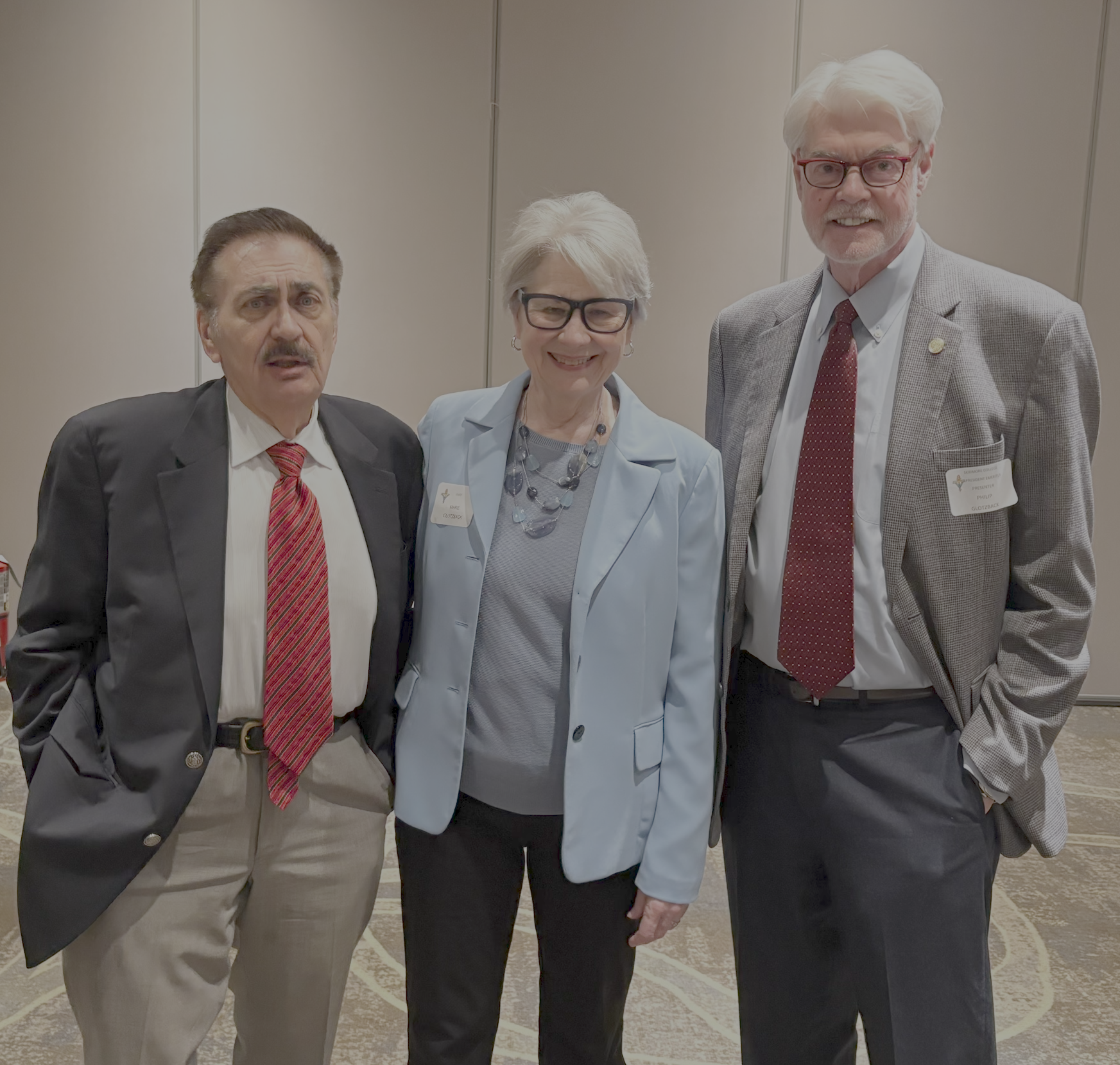
Torch Club President Gerald Stulc with Marie and Philip Glotzbach
Why Liberal Education Still Matters
This, for Glotzbach, lies at the heart of liberal education itself.
The word “liberal,” he reminded the audience, comes from the Latin liber, meaning “free.” Liberal learning was historically the education appropriate for free citizens — people capable of governing themselves and thinking independently.
“It gives you the capacity to be in charge of your own life,” he said, “and to be in charge of what you’re thinking.”
He urged students to choose majors not simply for economic advantage but for genuine intellectual engagement.
“Best if you fall in love with it,” he said, before adding one of the evening’s more memorable lines:
“Intrinsic motivation eats extrinsic motivation for breakfast.”
The AI Challenge
The conversation took on additional urgency when Glotzbach turned to artificial intelligence. AI, he argued, is rapidly transforming professional life, but the greatest danger may not be the technology itself so much as the temptation to surrender human judgment to machines.
“The worst thing students can do today,” he warned, “is to outsource big chunks of their education to artificial intelligence.”
Students who allow AI systems to do their reading, writing, and thinking never develop the intellectual “muscles” required for judgment and discernment.
He cited the recent case of attorneys disciplined after submitting AI-generated legal briefs containing fabricated citations — a cautionary example not merely of technological failure but of human irresponsibility. The future, he suggested, will belong to people who retain capacities machines cannot easily replicate: empathy, creativity, moral reasoning, and what David Brooks has called “a distinct personal voice.”
Education and Democracy
Glotzbach returned repeatedly to the connection between education and democracy. Higher education, he argued, is not merely a private benefit for the individual graduate but a public good essential to civic life.
Drawing on the observations of Alexis de Tocqueville, he spoke about the decline of community organizations and civic participation, warning that democracy cannot flourish when citizens cease engaging with one another in meaningful ways.
“Find Your Cause”
By the end of the evening, the talk had evolved into something deeper than a defense of higher education. It became a meditation on meaning and responsibility in a time of uncertainty.
Every year at Skidmore, Glotzbach told incoming students to “find your cause” — not necessarily a grand crusade, but some commitment beyond self-interest.
“You don’t have to become Mother Teresa,” he said.
But everyone, he argued, should ask:
“What is one thing that you want to do to help make this world a little bit better than you found it?”
For much of the last decade, public debates about college have revolved around tuition, debt, politics, and return on investment. Glotzbach acknowledged all of those realities. Yet his larger argument was that society may be forgetting the original democratic purpose of education itself: not simply credentialing or job preparation, but the formation of free human beings capable of wisdom, judgment, empathy, and civic responsibility.