

Torch brings people together to learn from one another. The Torch Network in Zoom will extend this experience across clubs and communities, connecting local gatherings with distant guests and making selected conversations available to a wider audience.
C&R Interactive and Saratoga Torch Club have been exploring for the last year how Zoom and artificial intelligence can enrich Torch meetings and increase its contributions to the community. President Gerald Stulc’s presentation at June’s International Torch convention sparked a discussion about developing a national Zoom network.
A New Space for Conversations
The idea begins with something familiar: people gathering to exchange ideas. Some might meet in a member’s living room, sharing refreshments before the program. Others could join through Zoom, bringing a question, a different perspective or knowledge from another part of the country.
A hybrid gathering could welcome a historian, scientist, author, artist or civic leader who would otherwise be unable to attend. It could also connect Torch members who rarely have an opportunity to meet. Local clubs would retain their own programs and traditions while gaining another way to participate.
The network would be a companion to Torch’s existing gatherings, with room for both informal fellowship and substantive discussion.
To Start: A Three-Channel Pilot
If you were put in charge of college sports tomorrow, what would you change first?
This proposed conversation brings together two contrasting perspectives: Ronald A. Smith, a historian of college athletics and advocate for athletes’ economic freedom, and R. Scott Kretchmar, a sport philosopher concerned with protecting education and the wider athletic community.
Starting with their exchange in The Torch, we will move beyond NIL to ask how college sports should be governed in the public interest. What constitutes fair treatment of athletes? How can universities protect education, women’s and Olympic sports, and competitive balance? Who should make the rules, and what voice should athletes have?
Exploring ways AI can serve
our communities
Showcasing a compelling article
in Torch magazine’s fall issue
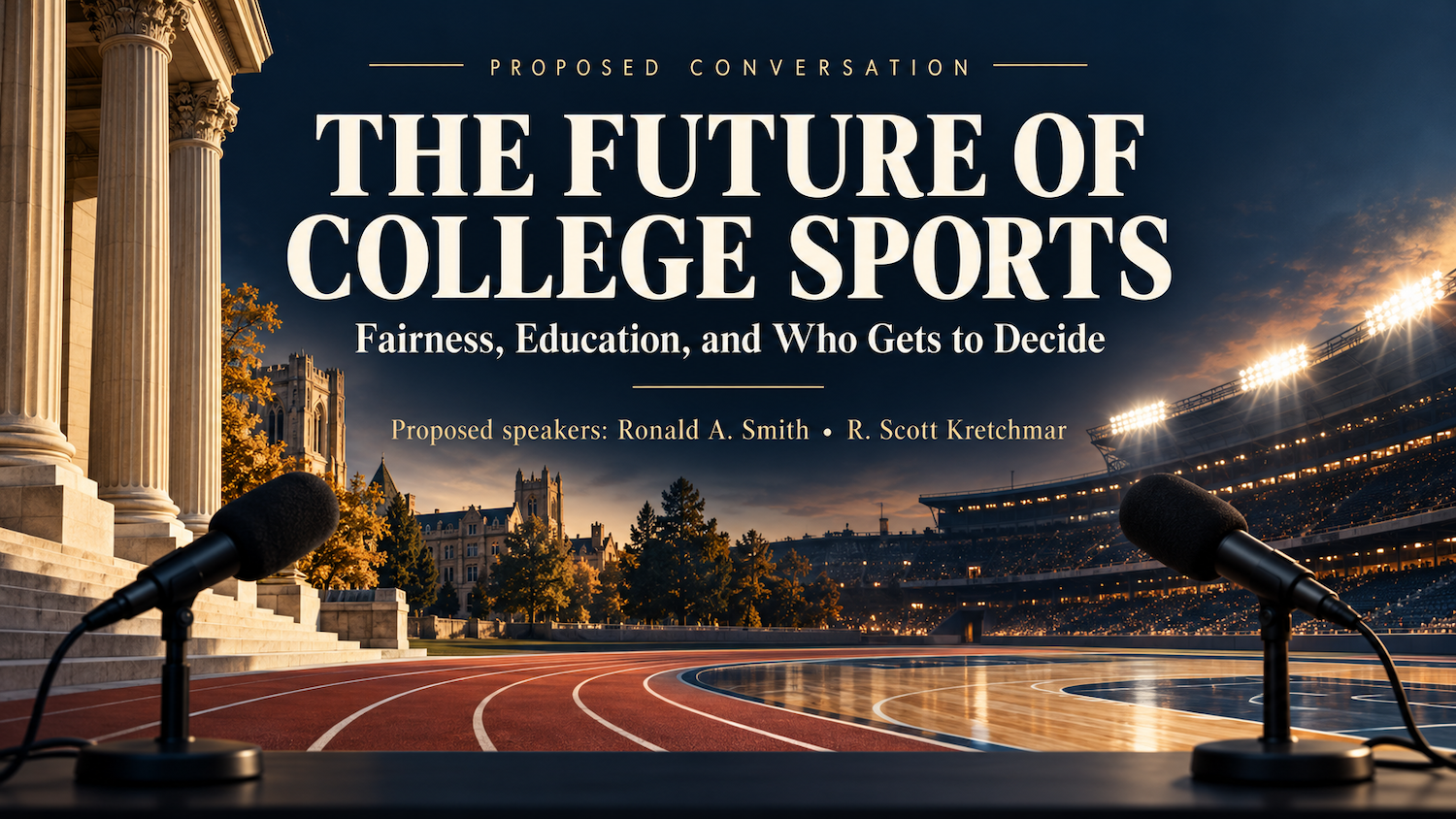
To be hosted Wednesday, January 25, five days before the 2027 College Football Playoff National Championship
AI at Work
Exploring ways AI can serve our communities
How can AI help us research a subject, prepare an interview, organize a transcript or communicate an idea? What should we check before trusting or publishing the result?
AI at Work offers a place to explore those questions through practical examples. Members could follow a conversation from recording to finished article, seeing where AI assists and where human knowledge, judgment and verification remain essential.
Stories from Open Space
Conversations with Historians and Tour Guides
The people who know a place best can help us see it differently. Conversations with historians and guides could introduce Torch members to overlooked stories, remarkable landscapes and communities they may never have visited.
Some encounters could lead to further reading or travel. Others could inform self-guided audio tours, developed with local expertise, documented sources and appropriate permissions.
From Conversation to Lasting Resource
A worthwhile discussion often contains more than anyone can absorb in a single sitting. Recording and publishing selected conversations would let members return to an idea, share it with a friend or contribute after the meeting.
The proposed process is straightforward:
Choose a worthwhile question and knowledgeable guests.
Share useful background before the conversation.
Welcome questions from both the room and Zoom.
Prepare an approved replay and a concise, fact-checked written account.
Publish through the relevant channel and invite further discussion.
Smartacus, our AI assistant, can help with research, preparation, transcription-based drafting and editing. People remain responsible for the questions, the accuracy of the work and the decision to publish.
Begin with a Pilot
We suggest beginning with three sessions: a civic conversation, a practical AI workshop and an encounter with a historian or guide.
Saratoga could provide the initial setting. Interested clubs could participate, suggest guests and help evaluate the experience. C&R Interactive, working under the Smartacus name, could coordinate agreed technical and editorial support.
Before launching a jointly branded program, we would agree on responsibilities, costs, recording permissions, publication rights and review procedures. A modest pilot would let us learn what members value and what the work requires before considering a larger commitment.
From Conversation to Lasting Resource
A worthwhile discussion often contains more than anyone can absorb in a single sitting. Recording and publishing selected conversations would let members return to an idea, share it with a friend or contribute after the meeting.
The proposed process is straightforward:
Choose a worthwhile question and knowledgeable guests.
Share useful background before the conversation.
Welcome questions from both the room and Zoom.
Prepare an approved replay and a concise, fact-checked written account.
Publish through the relevant channel and invite further discussion.
Smartacus, our AI assistant, can help with research, preparation, transcription-based drafting and editing. People remain responsible for the questions, the accuracy of the work and the decision to publish.
Begin with a Pilot
We suggest beginning with three sessions: a civic conversation, a practical AI workshop and an encounter with a historian or guide. Subjects, guests and dates would be chosen together.
Saratoga could provide the initial setting. Interested clubs could participate, suggest guests and help evaluate the experience. C&R Interactive, working under the Smartacus name, could coordinate agreed technical and editorial support.
Before launching a jointly branded program, we would agree on responsibilities, costs, recording permissions, publication rights and review procedures. A modest pilot would let us learn what members value and what the work requires before considering a larger commitment.
Help Shape What Comes Next
We invite the Executive Committee to help answer three questions:
Which conversations would be most valuable to Torch members?
Which clubs and members would like to help develop an initial pilot?
What arrangements would make this a useful and sustainable collaboration?
Our purpose is to create more opportunities for people to learn from one another, while preserving the fellowship that makes Torch meaningful.
Dan Forbush
Saratoga Torch Club · C&R Interactive LLC
dan@smartacus.com